In conservation, a window to protect critical habitat can close quickly. In mining, decisions can shape landscapes for years. At the United Nations Convention on Biological Diversity Conference of the Parties (COP17) in Yerevan, RESOLVE brought these challenges together: where and how to protect endangered species with the urgency required, and how to turn Nature Positive commitments into action across mining landscapes.
In October 2026, COP17 convened governments, companies, NGOs, Indigenous Peoples, and conservation leaders to advance implementation of the Kunming-Montreal Global Biodiversity Framework and the global goal of halting and reversing biodiversity loss by 2030 while putting nature on a path to recovery by 2050.
RESOLVE hosted sessions focused on two main themes: protecting the world's most important places for biodiversity and helping the mining sector move from nature-positive commitments to action. RESOLVE’s delegation—Stephen D’Esposito, Carly Vynne, and Sanjiv Fernando—contributed insights at two RESOLVE-hosted events at the Nature Positive Pavilion and as panelists in additional sessions at the Nature Positive and IUCN Pavilions.

On October 24, RESOLVE and the Quick Response Fund for Nature (QRFN) hosted “Nature Positive Starts with Protecting the Last Homes of Threatened Species.” The session focused on how protecting the world's remaining strongholds for threatened species represents one of the most effective ways to halt and reverse biodiversity loss.
Sanjiv Fernando highlighted RESOLVE's Conservation Imperatives research, which demonstrates that protecting just 1.2% of global land can help prevent most species extinctions. He emphasized that knowing where to focus conservation investments is a critical first step, but that success also depends on having mechanisms that can move with the urgency required. Traditional conservation funding processes are often too slow and critical habitats can be cleared while grants sit in review.
Sanjiv then explained how RESOLVE created QRFN to address this gap by providing rapid funding when urgent conservation opportunities arise. Drawing on a decade of impact, he shared examples of QRFN grants that protected critical habitats and helped establish the first protected areas for endangered species. He also highlighted how RESOLVE is working with funders and companies to protect priority sites and invited new partners to join us and scale investment in these areas.
Carly Vynne then spoke about how technology can strengthen long-term site protection. She highlighted how tools like TrailGuard, an AI-enabled camera system that detects people, vehicles, and target wildlife species, can be used to protect reserves from poaching and illegal logging, reduce human-wildlife conflict, and support biosecurity monitoring for invasive species.

The panel brought together diverse perspectives on protecting threatened species and their habitats. Ella Holbrook shared how QRFN’s rapid funding was vital in helping Salvemos Selva secure the first protected area for the critically endangered Caquetá titi monkey. Anne Alexandre of Conservation Connect discussed how science-based frameworks such as Conservation Imperatives can help direct resources toward places where they can achieve the greatest conservation impact. Jonty Knox of Rio Tinto offered a private-sector perspective on why protecting threatened species should be a priority for companies, noting that investing in these areas can deliver outsized conservation returns.

Earlier in the week, Sanjiv also participated in a panel of rapid-response funders in IUCN NL's session, Frontline Conservation Resilience: Why Trust-Based Rapid Response Funding is Essential for Delivering the Global Biodiversity Framework. He shared QRFN's experience supporting time-sensitive land acquisition opportunities for threatened species and contributed to a broader discussion on trust-based philanthropy, collaboration among emergency funds, and how funders can work together to support trusted local partners and respond quickly to urgent needs.
Corporate commitments to nature-positive outcomes and the role of the mining sector in protecting and restoring biodiversity were prominent themes throughout discussions at the Nature Positive Pavilion. RESOLVE brought experience from its Mission Critical initiative, which works to align critical minerals development with climate, biodiversity, and community goals; Nature Lift, which helps companies translate nature commitments into credible action on the ground; and Regeneration, a social impact enterprise using innovative approaches to re-mine and restore legacy and abandoned mine sites.
The conversation then widened from priority habitats to the landscapes shaped by mining. RESOLVE and Regeneration Enterprises hosted Building Nature Value at Mine Sites and Across Landscapes: Case Studies in Action at the Nature Positive Pavilion on October 25. The session brought together perspectives from mining industry associations, mining companies, and NGO partners working to support companies in moving from commitments to implementation.

ICMM outlined its Nature Position Statement and expectations for action at both the direct operations and landscape levels. The Nature Positive Landscapes Initiative shared how science-based approaches and systematic planning can help guide credible action across landscapes. Resolution Copper emphasized the importance of demonstrating that mining can be done responsibly, prioritizing both nature and communities, and highlighted the role of partnerships with NGOs in delivering biodiversity commitments. Rio Tinto shared its experience with biodiversity strategy and partnership development at Simandou, Guinea.
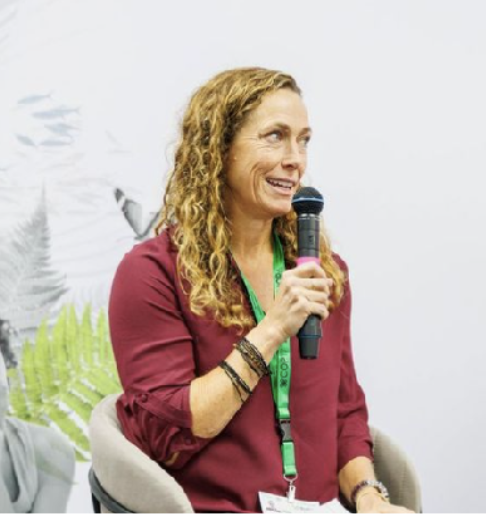
“Nature-positive mining will be defined by action, not intention. The most promising examples are those where companies deliver strong outcomes at site, engage partners early, and invest in collaborative approaches that generate benefits for nature and communities at the landscape level.”
- Carly Vynne
While much of the discussion focused on improving biodiversity outcomes at active mining operations, Stephen D’Esposito highlighted the often-overlooked opportunity presented by legacy and abandoned mine sites. He introduced Regeneration, a re-mining and restoration social impact enterprise created by RESOLVE, and shared an example from British Columbia showing how re-mining and ecological restoration can turn long-standing environmental liabilities into opportunities for ecosystem recovery, local economic development, and community benefit.
Following a lively discussion and strong interest in practical, real-world examples, RESOLVE announced a commitment to publish a recurring report highlighting leading examples of biodiversity action across the mining sector.
Carly joined the panel for Beyond Business as Usual: Landscape-Scale Change for a Nature-Positive Future, alongside experts from mining companies and international organizations. She shared RESOLVE's work supporting Resolution Copper in developing its nature-positive strategy and convening partners to help co-develop, validate, and strengthen the approach over time.
Putting commitments into practice also depends on knowing what is happening across a landscape and where action is needed. As an invited panelist at ICMM's From Hotspots to Action: Using Data to Deliver Nature-Positive Outcomes, Carly shared perspectives on the types of actions and accountability mechanisms that can give confidence that corporate commitments will translate into measurable biodiversity outcomes.

In the rotating panel discussion, Stephen D'Esposito shared insights on how NGOs can help mining companies implement and stand behind their commitments through partnerships, technical expertise, and on-the-ground implementation support. During the closing discussion, Sanjiv highlighted practical examples of moving from identifying priority sites to creating protected areas, and called for greater attention and investment in translating voluntary commitments into tangible conservation outcomes.
Together, these discussions underscored a common theme: achieving global biodiversity goals will require both clear priorities and the ability to act with speed and scale. From protecting the last remaining habitats of endangered species to helping companies turn nature-positive commitments into measurable outcomes, RESOLVE is working with partners to accelerate action where it can have the greatest impact.

At RESOLVE, we’re here to tackle the toughest global challenges. The ones nobody else wants to touch. Where people are in conflict and planet problems are stuck. We’re here to unstick them. It’s not easy. It takes grit and ingenuity. And finding and working with the right partners. But we’re not called RESOLVE for nothing.


